Summary for the Week of September 25, 2026
- The 10-year closed at 5.18 percent on September 24, its highest since July 2007; the 30-year reached 5.49, its highest since the bond returned in 2006 (Treasury).
- Since June 1 the 10-year’s inflation-adjusted yield has risen 76 basis points and its breakeven inflation rate has fallen 6 (Treasury real yields).
- Futures put the odds of an October 28 increase at about 64 percent, from about 55 percent a week earlier (CNBC; Reuters).
- The 30-year mortgage rate reached 7.03 percent, the highest since January 2025 (Freddie Mac).
Bond investors spent the week asking to be paid more after inflation, not for more inflation. The 10-year yield rose 16 basis points, to 5.17 percent at Friday’s close, and 15 of them came through the yield on inflation-protected Treasuries; the breakeven rate, the gap between the two, went from 2.33 to 2.34.
The rise sat far out the curve. The two-year gained 5 basis points on the week and the five-year 12, so the rate the curve implies for years six through ten rose about 20, all of it inflation-adjusted. The October decision reaches those years only indirectly. The reporting cannot say whether investors raised their view of long-run growth or demanded more to hold long bonds; the week produced evidence for both.
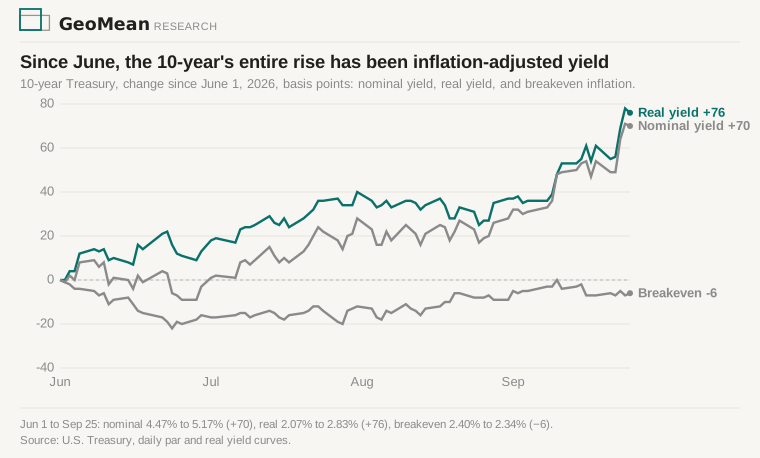
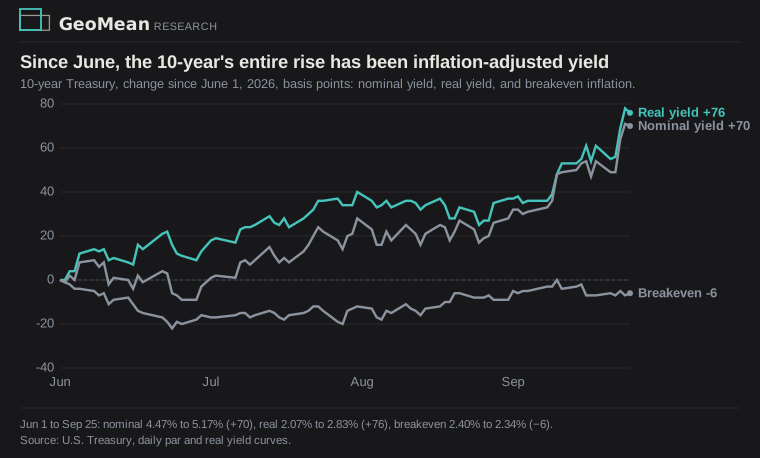
Households’ one-year inflation outlook jumped; the long run edged up
Diesel set a nominal record for the third straight week, at $6.529 a gallon (EIA). Consumers now expect 4.6 percent inflation over the next year, up from 4.0 in August, and 3.4 percent over five to ten years, up from 3.3 (University of Michigan via CNN). The 10-year breakeven rose from 2.31 to 2.34 percent over the same month, has stayed between 2.2 and 2.4 since June, and moved 2 basis points on September 23, when Brent rose 3.9 percent (CNN).
Oil ended the week about where it started. Brent futures extended a five-day slide to $99.25 on Tuesday (CNBC), jumped to $106.60 on Thursday after a Houthi missile attack on Saudi Arabia (CNBC), and closed Friday at $104.30, up 0.4 percent on the week (The National).
Wednesday’s selloff came before the weak auction
The 10-year’s 15-basis-point rise on September 23 was its largest in a day since November 2024. Yields were already rising with oil that morning (CNN). At 9:45, S&P Global’s flash composite output index came in at 58.4, its highest since July 2021 (CNBC). At 10:05, Governor Michael Barr said that in his base case “further policy adjustments are likely to be needed” (Fed). The closing yields cannot separate the two.
Just before 1 p.m., the five-year traded at 5.00 percent in when-issued trading, 17 basis points above Tuesday’s close (investingLive). Treasury then sold $70 billion of five-year notes at 5.033 percent, the highest yield at that auction since June 2006. Bids covered the offering 2.21 times, the fewest since December 2018, and indirect bidders, the category that includes foreign central banks, took 54.3 percent, their smallest share since March 2020 (TreasuryDirect). Auction results do not name which buyers stepped back. The five-year closed at 4.99, below the auction yield, so the auction did not extend the day’s rise.
Two-year yields followed the Fed; the 30-year did not
John Williams (New York Fed) called another increase by year-end “reasonable” on Thursday, when the odds of an October increase reached 77.5 percent (CNBC). Alberto Musalem (St. Louis Fed) said that without further restraint inflation is more likely to be “substantially above our 2% target in 18 months than at target” (Reuters via WHTC). Chair Kevin Warsh made no public remarks.
The two-year followed the odds, up 11 basis points by Thursday and down 6 on Friday as they eased. The 30-year kept rising on Friday and gained 15 on the week to the two-year’s 5; on Thursday it rose 7 even as Treasury bought back $4.08 billion of long bonds out of $10.47 billion offered (TreasuryDirect). Bob Elliott (Unlimited) called buybacks of $6 billion an operation “not that big a deal” (Unlimited).
Bianco ties the peak in yields to an October increase
Jim Bianco (Bianco Research) says the 10-year is “very close” to its peak, and that a hold on October 28 would send it to 5.50 (Bianco Research). The conditional assumes an increase holds long yields down. Since the Fed raised rates on September 16, the 10-year has risen from 5.01 to 5.17 and the 30-year from 5.35 to 5.49.
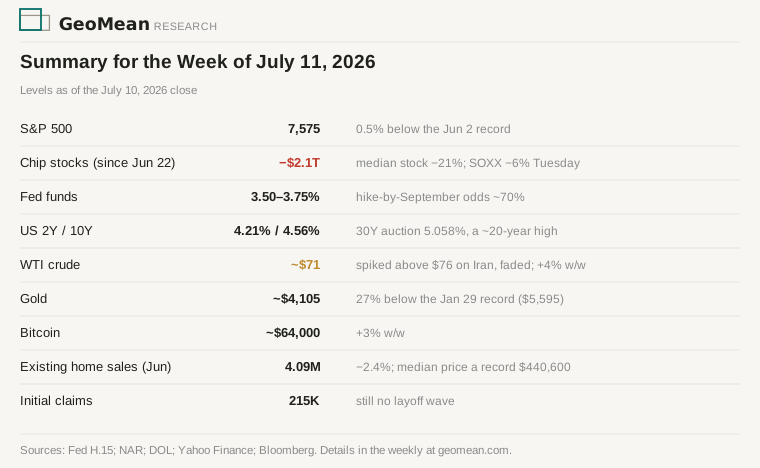
Snapshot
Watching
- Wed Sep 30 — August PCE with BEA’s annual update. The update reprices the investment-fee line that was nearly half of July’s core increase.
- Thu Oct 1 — September ISM manufacturing. Prices paid were 71.1 in August; September is the first ISM survey month with Brent back above $100.
- Fri Oct 2 — September jobs. Another labor-force gain would make August’s 683,000 jump more than a rebound.
- Wed Oct 14 — September CPI. Core above 0.3 percent would be a clearer sign of energy spreading, which Fed officials cite as their reason to raise.
- Wed Oct 28 — the FOMC. A hold with the 10-year at 5.50 or above would confirm Bianco’s conditional; an increase tests whether long yields fall with it.
Sources
Rates: Treasury par yield curve · Treasury real yield curve · 10-year history, FRED DGS10 · five-year auction results, Sep 23 and investingLive’s when-issued read · Treasury buyback results, Sep 24 · Freddie Mac weekly rate history · Fed: Barr, Sep 23 · Williams via CNBC, Sep 24 · Musalem, Reuters via WHTC, Sep 21 · October odds: CNBC, Sep 23 and Sep 25 · Reuters, Sep 18 · Data: S&P Global flash PMI via CNBC, Sep 23 · University of Michigan final September, via CNN · Oil: EIA weekly diesel prices · CNBC, Sep 22 and Sep 24 · The National, Sep 25 · CNN, Sep 23 · Voices: Jim Bianco, Rational Dissent, Sep 25 · Bob Elliott, Unlimited, Sep 25 · Builds on the September FOMC note.