Summary of the September 2026 FOMC decision, September 16, 2026
- Rates rose a quarter point to 3.75–4 percent on a 12–0 vote, the first increase since July 2023 (statement, rate history).
- The median projection has the rate at 4.1 percent through 2027, from 3.8 and 3.6 in June; 16 of 18 participants expect another increase this year (projections).
- Chair Kevin Warsh said no single report drove the decision; a stronger economy, summer inflation trends that “weren’t passing the test,” and geopolitics did (transcript).
- Two-year yields rose 7 basis points on the day and fell 7 the next; the 30-year fell both days (Treasury).
All nine July holdouts voted to raise; the committee stopped looking through oil
July’s statement blamed inflation “in part” on “supply shocks… including energy”; September’s says only “Inflation remains elevated. Today’s policy action will support a timelier return to the Committee’s 2 percent goal.” Dropping that clause while raising rates, with Brent futures at $105.83 and up 16 percent in September (CNBC), says the committee will no longer look through the energy shock.
President Trump, who had demanded cuts for months, called after the vote for rates of “1%, or less” and said he had told Warsh to “vote with the board. It’s not going to matter” because “he doesn’t have the votes” (CNBC, CNN). That account has the chair outvoted, and a 12–0 line cannot show otherwise. What it cannot explain is the chair’s own public case: conditions not restrictive, a fixed target, prices the predominant focus. Trump also said he did not think Warsh decided on what he told him. On the record, the pressure did not move an institution acting to hit its target.
Projections add a 2026 increase, remove 2027’s cut, and reach 2 percent in 2029
Four of 18 still project a 2027 cut; in June the median did.
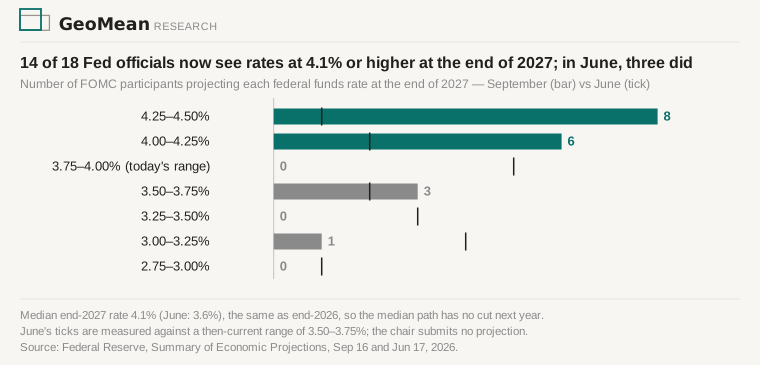
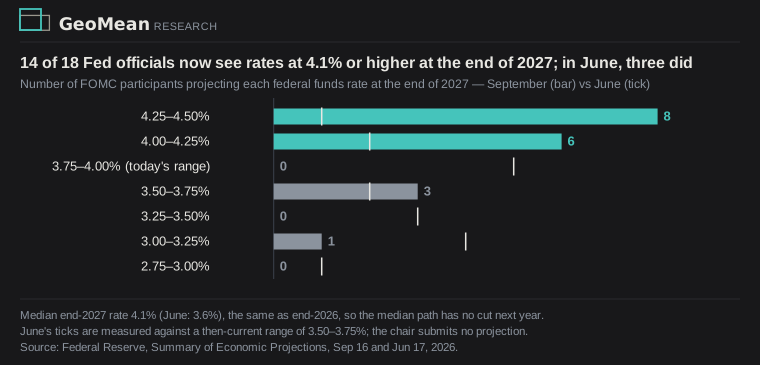
Core PCE inflation falls from 3.4 percent this year to 2.5 next, with unemployment flat at 4.1 and the rate held at 4.1: a disinflation with no projected labor cost. Asked how “timelier” squares with 2029, Warsh said “those aren’t my forecasts.”
Warsh cited breadth, not a level; the level he cited is re-measured September 30
Warsh put August core PCE at “about 3.2” percent against core CPI at 2.4, a five-year low (our August CPI note). His test is breadth, “too many categories are still posting increases above 3 percent,” 54 percent of the basket’s components by his Jackson Hole count (our note). Without the portfolio-management fee line, 12-month core PCE was 3.0 percent in July (our July PCE note), and on September 30 BEA changes how it prices that line, a change Fed Governor Christopher Waller said could lower 12-month PCE inflation by “a few tenths of a percentage point” (Fed). If the restatement takes core toward 2.9, the breadth test is what remains of the case, and that figure is not restated.
Short yields gave back Wednesday’s rise by Thursday; long yields fell both days
The increase was 92 percent priced (CME FedWatch via CNBC); two-year yields rose 7 basis points to 4.74 percent after the projections showed a second one, and closed back at 4.67 on Thursday. The 30-year fell 1 basis point to 5.35 on the day and 6 more on Thursday; on July 29 a hold had done the reverse, two-year down 4 and 30-year up 11 (Treasury).
Sources
FOMC statement, Sep 16 and implementation note · July 29 statement · Summary of Economic Projections, Sep 16 and Jun 17 · Press-conference transcript, preliminary · Fed policy-rate history · Treasury par yield curve, 2026 CSV · Waller, Sep 3 · BLS PPI, August 2026 · CNBC markets, Sep 16 session · CNBC on the president’s remarks · CNN, Sep 17 · CNBC oil, Sep 16 · Builds on the July FOMC note, the Jackson Hole note, and the August CPI and July PCE notes.