Summary of September ISM Services, October 5, 2026
- 50.3% of services firms paid higher prices, up from 44.8% in August; April was 50.7% and May 50.9%.
- ISM’s prices index rose to 74.0, which ISM calls its highest since July 2022; seasonal factors took 4.0 points off April’s reading.
- 16.5% of services firms added staff and 16.2% cut.
Prices index passed April’s on a slightly smaller share
Half of services firms, 50.3%, paid more in September than in August, when 44.8% did (ISM, September report). In three years of ISM’s response tables only April (50.7%) and May (50.9%) were higher.
ISM’s prices index is the share paying more plus half the share reporting no change, seasonally adjusted. It rose 1.4 points to 74.0, which ISM calls the highest since July 2022. April’s was 70.7.
Seasonal factors account for the gap. They took 4.0 points off April’s reading and almost nothing off September’s, because ISM’s factors are built on more firms reporting higher prices in spring. September’s rise was in the responses: 2.8 points before adjustment and 1.4 after. August’s was 0.5 before and 2.3 after.
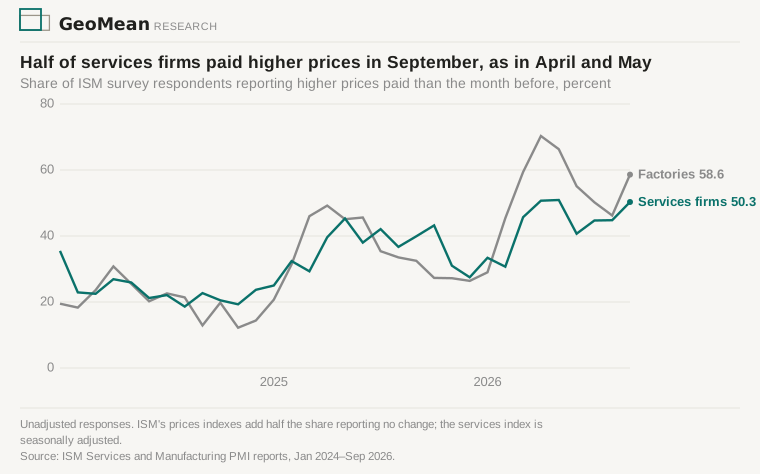
Services’ share paying more recovered nearly fully, factories’ half
The share of services firms paying more was 6.1 points lower in August than in May and regained 5.5 in September. The share of factories fell 24.1 points from April to August and regained 12.4, to 58.6% (September ISM manufacturing note).
Brent crude averaged $114 in September, against $117 in April and $107 in May (EIA spot, via FRED). With Brent at $84 to $91 from June to August, 41% to 45% of services firms paid more. ISM’s chair says fuel costs “were mentioned twice as often as any other single issue” and names tariffs beside them; the release does not divide the increase.
ISM’s index counts what firms pay, not what they charge. September’s CPI arrives October 14.
About as many services firms cut staff as added
In September 16.5% of firms added staff and 16.2% cut, and the employment index rose 2.3 points to 50.1. BLS counted 28,000 more private service jobs (September jobs note).
ISM’s chair says the rise “seems to have resulted from increasing backlogs, as well as high levels of business activity and new orders.” Six of the seven industries adding staff reported larger backlogs; finance, health care and utilities reported larger backlogs and cut staff. ISM’s lists give direction, not size, and have health care cutting staff in the month BLS counted 23,000 more health care and social assistance jobs.
Activity index fell 5.2 points, after 5.1 last September
The services index fell 0.5 points to 54.9; business activity, down 5.2 points to 56.5, took 1.3 off it. Before adjustment the activity reading fell 1.5 points; seasonal factors are the other 3.7. Last September it fell 1.6 points before adjustment and 5.1 after, then regained 4.4 in October.
Sources: ISM, September 2026 Services PMI Report — PMI 54.9; sub-indexes, response shares, industry lists and the chair’s statement (release text and transcription archived). Response shares for October 2023–September 2026 are transcribed from each month’s ISM services and manufacturing release; the unadjusted readings are the share reporting higher plus half the share reporting no change. Brent: EIA spot price, FRED series DCOILBRENTEU, daily prices through September 29, archived. Payrolls: BLS Employment Situation, September 2026, archived. Builds on the August ISM services note, the September ISM manufacturing note and the September jobs note. ISM is a diffusion index (50 = breakeven) and proprietary, not on FRED; of the services indexes, only business activity, new orders, employment and prices are seasonally adjusted.