Summary of August JOLTS, September 29, 2026
- Openings fell 256,000 to 7.08 million against about 7.2 million expected; July was revised up 64,000 to 7.34 million.
- Establishments with 1–9 employees posted 335,000 fewer openings; larger private establishments posted 120,000 more.
- Over the year, openings rose 160,000, all outside the smallest establishments.
- Layoffs edged down to 1.64 million, the fewest since March 2025; quits held at 1.9%.
The only openings decline BLS flagged as statistically significant in August was at establishments with 1 to 9 employees, where openings fell from 1.39 million to 1.05 million (BLS JOLTS, Table 7). BLS called total openings “little changed.”
Openings per unemployed worker fell to 1.01 from a revised 1.06. With the smallest establishments held at July’s level, the ratio would have been 1.05.
Openings rose over the year only at larger employers
Outside establishments with fewer than 10 workers (larger private employers plus government), openings have been between 5.8 and 6.1 million every month of 2026, up from 5.49 million in December. August’s openings were 160,000 higher than a year earlier, and all of that increase was outside the smallest establishments.
The smallest establishments swung and came back. Their openings fell 426,000 in February to 787,000, the lowest since September 2020, then rose 586,000 in April, the largest one-month rise since at least 2011. At 1.05 million in August they are exactly where they were a year earlier. Hires there did not rise: 679,000 a month from April to August, against 719,000 from January to March.
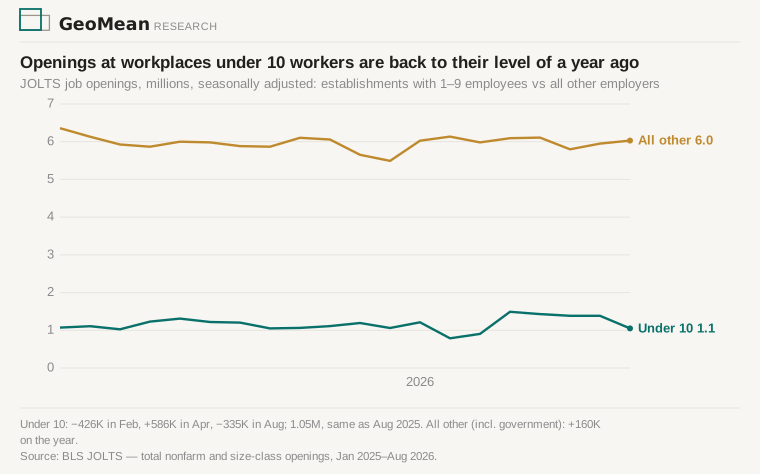
The release does not say why. This series moves more than it used to: since 2022 its monthly changes have a standard deviation of 176,000, twice the 88,000 of 2011–2019.
Warsh was right about openings over the year, not since March
On September 16, Fed Chair Kevin Warsh said “both job openings and weekly hours have been increasing” (transcript). On the data he had, that was accurate: July’s first estimate, 7.27 million, was 721,000 above December and 182,000 above a year earlier. The rise from March to July was entirely at the smallest establishments, and August reversed most of it; the rise from a year earlier is outside them, and it held.
Layoffs edged down to the fewest since March 2025
Layoffs and discharges edged down to 1.64 million (1.0%), which BLS calls essentially unchanged, and initial jobless claims were 197,000 in the week ending September 19, below 2025’s weekly average of 226,000 (Labor Department). Quits held at 1.9%, a 14th month at or below 2.0% (2019 average: 2.3%), and the hires rate edged up to 3.3% from 3.2%.
The Fed raised rates to 3.75–4% on September 16. This report makes no labor case for reversing that on October 27–28, and none for another increase. Any case for another increase rests on inflation. The September JOLTS arrives November 3, after that meeting.
Sources: BLS Job Openings and Labor Turnover Survey, August 2026 (USDL-26-1547) — levels and rates, the July revisions, Table A industry detail and Table 7 establishment-size detail. Size-class history (series JTS100000000000001JOL and the matching hires series) from the BLS public data API, 2011–2026. BLS Employment Situation, August 2026 for unemployed workers (LNS13000000). Initial claims: Labor Department weekly unemployment insurance claims, seasonally adjusted, archived with this piece. Kevin Warsh, press conference transcript, September 16, 2026. The 2019 average, the quits streak, the size-class volatility and the lowest-since comparisons are counted from series archived with this piece. Builds on the July JOLTS note and the September FOMC note.