Summary of the Q2 2026 GDP second estimate, August 26, 2026
- Real GDP printed 1.5 percent again, which BEA calls a downward revision of less than 0.1 point: consumer spending was revised up, imports and inventories back down.
- Gross domestic income grew 2.2 percent in real terms, accelerating from 1.2, while GDP decelerated from 2.1.
- Domestic corporate profits reached 13.2 percent of gross domestic income, the highest since 1947; compensation was 50.4 percent, against 53.2 five years ago.
- Real disposable personal income fell 1.5 percent in the quarter and is down 0.1 percent over four quarters, its first negative reading on that basis since 2022.
The headline barely moved. Almost everything under it did: output is being bought, companies are taking a record share of the income it generates, and households are losing ground in real terms.
Profits, not paychecks, carried the income side
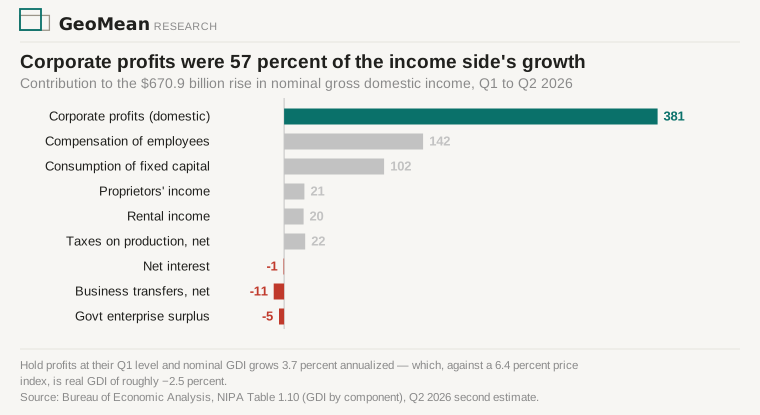
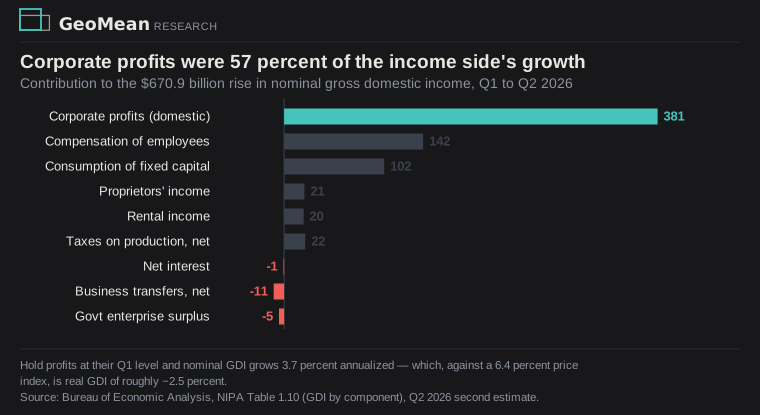
Profits from current production rose $400.9 billion, against $74.4 billion in the first quarter — $381 billion of it domestic, the part entering gross domestic income. Only the third quarter of 2020 saw a larger dollar increase. That took profits to 13.2 percent of national income — no quarter since 1947 has been higher, the previous record being 12.7 percent in 1950.
Strip profits out of both quarters and the rest of the income side grew 4.3 percent annualized in nominal terms, below the 6.4 percent GDP price index. Compensation grew 3.6 percent nominal against consumer prices up 5.3 percent. Net interest income was flat.
Reuters reported the jump was “likely driven by Trump’s corporate tax overhaul.” The tables cut the other way: profits before tax rose 9.6 percent against 8.9 after tax, and the share taken in corporate taxes rose from 16.9 to 17.4 percent. Whatever produced these margins, it was not a lighter tax bill this quarter.
The gap between the two measures is a discrepancy shrinking, not a divergence
The statistical discrepancy — what BEA books between spending and income — narrowed from $291 billion to $241 billion, from 0.92 to 0.74 percent of GDP. That narrowing is most of the 0.7-point gap between the growth rates, and 144 of the 318 quarters since 1947 carried a larger one.
Over four quarters the spending measure grew 2.10 percent and the income measure 2.15. BEA’s average of the two puts the quarter at 1.8 percent, against 1.7 in the first.
Inventories and trade took 1.9 points off a strong demand quarter
Private domestic demand grew 4.2 percent, nearly three times the headline, revised up from 3.9. Inventories subtracted 0.72 points and net exports 1.14 as imports grew 12.5 percent — partly, on the Associated Press’s reading, chips and other equipment for artificial-intelligence investment arriving from abroad.
All of it faces an outsized revision on September 30, when the third estimate lands the same day BEA opens its 2026 annual update of the national, industry and regional accounts.
Sources: BEA, GDP (Second Estimate) and Corporate Profits, 2nd Quarter 2026 (BEA 26–38) and its release PDF, both archived, with the historical comparisons workbook diffed against the advance estimate’s for the revision detail. GDI components, the statistical discrepancy, profit and compensation shares, and corporate taxes from NIPA Tables 1.10, 1.7.5, 1.12 and 6.16D. Shares, four-quarter rates and the 1947–2026 discrepancy distribution were computed from those series; the script and its output are archived with this piece. Coverage: Reuters, AP. Quarterly figures are seasonally adjusted annual rates. Household-income figures here are quarterly; our July PCE note covers the first month of the following quarter, when real disposable income rose 0.4 percent.