Summary for the Week of August 8, 2026
- July payrolls fell 23,000 against a consensus near +83,000, with 103,000 more revised away; unemployment fell to 4.1% because the labor force shrank 264,000 (BLS, archived).
- September hike odds fell from about 67% to near 40% after the release (CNBC).
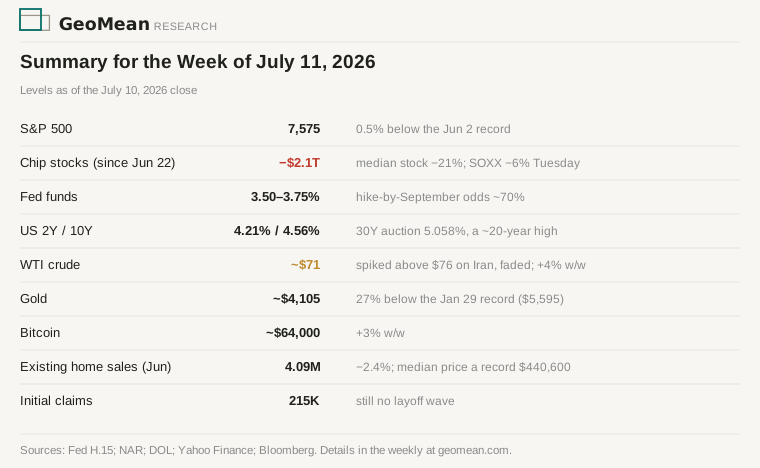
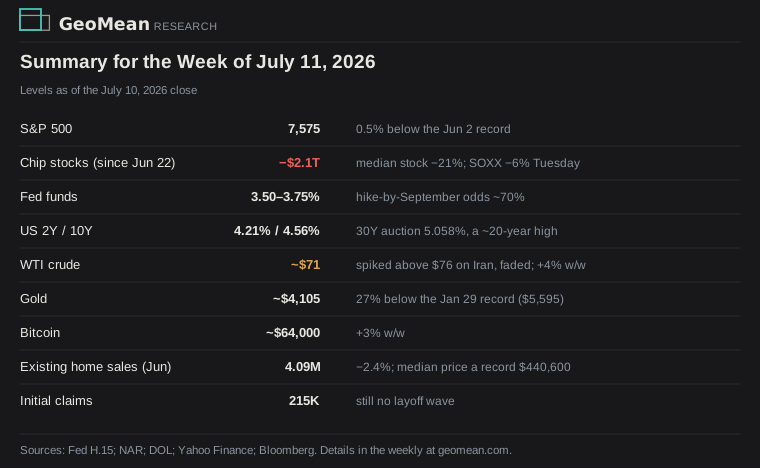
- The S&P 500 set record closes Tuesday and Friday, ending at 7,757.64, up 3.6% on the week — the best week since April (AP); the Nasdaq also closed at a record.
- WTI fell about 7% to the high $70s as Iran and Oman set coordinates for a permissioned Hormuz transit corridor and an interim deal neared (Axios).
- Gold rose about 7% to $4,343 — a seven-week high, still well below January’s record (Yahoo Finance); 30-year Treasury yields eased from 5.27% to 5.19% (Treasury).
September hike odds, built over five weeks, fell nearly in half within hours of one number: −23,000, the first negative payroll month since 2020. Whether the report earned that reading is the better question — government cuts more than accounted for the decline, and unemployment fell only because 264,000 people stopped looking, on aging and reduced immigration (the full anatomy is in the July jobs note). What is not ambiguous: wage growth at 3.2% is the slowest since May 2021, and no case for overheating survives it.
The report that repriced September points four directions at once
Payrolls negative, unemployment down, participation at a five-year low, wages decelerating. A committee that reads breakeven job growth as near zero under current demographics sees a stall; the dissenters, reading a 4.1% unemployment rate — however achieved — see anything but slack. Michael Lebowitz (RIA Advisors) put it plainly on Thoughtful Money’s roundup: “It’s a pretty crappy number and it’s not necessarily bad… there’s nothing happening in the labor market and that’s not good” (Aug 8). Investors priced the dovish reading within hours; the committee has no such deadline.
Oil and the Treasury moved before the jobs report did
Oil eased first: Iran and Oman fixed coordinates for a permissioned transit corridor, an interim framework neared, and WTI gave back about 7% — the inflation driver that rebuilt the case for a hike in July faded through the week. Then Wednesday’s refunding held coupon sizes, with guidance that Treasury “anticipates maintaining nominal coupon and FRN auction sizes for at least the next several quarters” (Treasury) — a softening from prior quarters’ formula, in the Forward Guidance roundup’s parsing, that leaves room for reductions. On Forward Guidance’s roundup — where the week’s machinery was framed as volatility suppression migrating from the Fed to the Treasury — Quinn Thompson (Lekker Capital) expects more of it into the midterms: “every time yields start rising… they seem to have an answer for it” (Aug 7). The yen defense’s mechanics point the same way: per Michael Lebowitz, Japan is not selling Treasuries to fund it, so the operation adds no upward pressure on yields. Lebowitz reads the same mechanics benignly — real yields near 3% are the anchor, and the yield rise is term-premium sentiment, not inflation expectations, which sit flat over four years. Both can be right about the mechanics while disagreeing about the motive, and the test is dated: if the November refunding cuts coupon sizes while inflation runs above 3%, the benign reading fails. Held sizes settle nothing.
Stocks set records; the 30-year gave back eight basis points
The S&P’s 3.6% week took it through the June record twice; gold’s 7% week only returned it to mid-June levels; and the 30-year’s rally — 5.27% to 5.19% — left it below only the spike closes of the previous seven trading days, at a level that before July 29 would itself have been the highest since 2007 (Treasury daily curve, archived). For a third week, short-maturity pricing followed the Fed news cycle while long-maturity yields barely moved. Jeffrey Gundlach (DoubleLine) has called for a mid-5s 30-year by September — roughly 30 basis points from here in five weeks; next week’s $25 billion 30-year auction at these levels is the nearer test. Gold’s 7% week has a boring first explanation: hike odds fell, and gold rises when the expected rate path falls. The debasement reading its holders prefer needs more than one week off a seven-week low.
Between here and the September 15–16 meeting: CPI Wednesday, Jackson Hole on August 28, the September 4 jobs report, and a second CPI the week before the decision. The committee’s dissenters wanted to act against inflation the data hadn’t confirmed; the majority now has a report too ambiguous to act on at all. The week’s honest summary: the cyclical scare faded, and the structural repricing didn’t.
Snapshot
Watching
- Aug 11–13 — Treasury auctions: $58B 3-year, $42B 10-year, $25B 30-year. The 30-year at 5.19% meets its first supply since the refunding’s language shift.
- Wed Aug 12 — July CPI, 8:30 ET. A CPI reading of 0.1% or below is Lebowitz’s stated threshold for taking the September hike off the table; energy will carry the headline after crude’s July spike and reversal.
- Aug 28 — Jackson Hole. Warsh’s first scheduled long-form defense of letting long-maturity yields find their own level.
- Sep 1 — BLS benchmark preliminary estimate. This cycle’s revisions have all pointed down. [Correction, Aug 17: BLS schedules this release for August 28 at 10:00 ET — the same day as Jackson Hole — not September 1 as originally published.]
- Sep 4 — August jobs. The last employment report before the September 15–16 meeting.
- Hormuz. Corridor implementation vs. the excluded-vessels dispute; oil’s 7% give-back reverses if the interim deal slips.
Sources
Data: BLS Employment Situation (archived and verified) · Treasury refunding statement · Treasury daily yield curve, 2026 · Fed pricing: CNBC · markets: AP, Yahoo gold · war/oil: Axios, CNBC gold/Hormuz · OPEC+ decision. Voices: Thoughtful Money roundup with Michael Lebowitz · Forward Guidance roundup · Joseph Wang, Markets Weekly Aug 8. Builds on the July jobs note, the July FOMC note, and the August 1 weekly. Figures archived in the GeoMean data files.