Summary of June ISM Manufacturing, July 1, 2026
- The ISM factory index came in at 53.3 — a touch under the 54 the market looked for and down from May, but a sixth straight month of expansion. Growth, just slower.
- The signal isn’t the headline, it’s prices: the ISM prices index dropped 9.1 points to 73, its sharpest cooling in months, as June’s oil reversal fed through manufacturers’ costs.
- That’s real disinflation — and it’s entirely goods. Cheaper commodities cool the factory cost line; they don’t reach the services core (core PCE 3.4%) where the inflation problem actually sits.
- Fed Chair Kevin Warsh, speaking in Sintra the same morning, said prices are “too high” and reaffirmed price stability. A cut isn’t coming to a services problem.
Softer internals under a headline that held
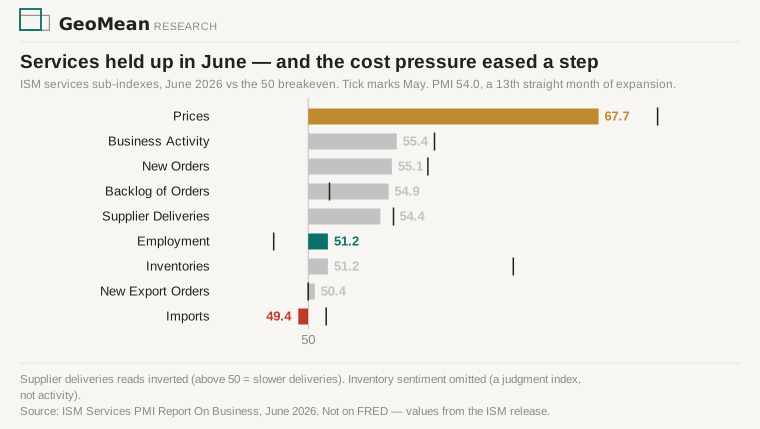
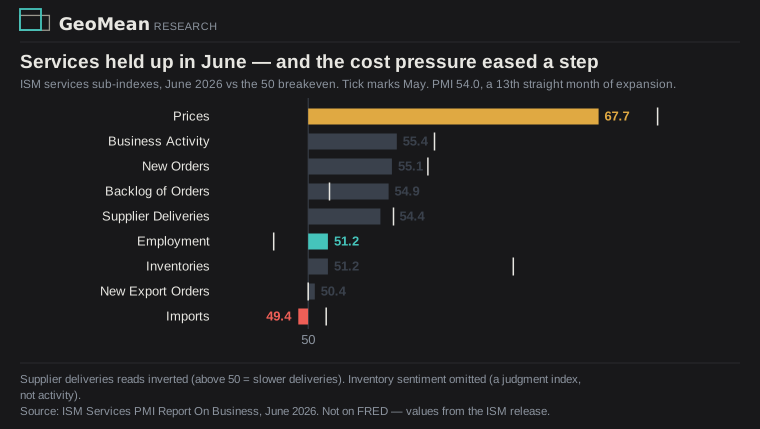
The PMI is a diffusion index — it counts how many firms are growing, not how fast — so 53.3 means most factories expanded again in June, the sixth month running (ISM, June Report On Business). Seven of the ten sub-indexes are still above 50, but the internals softened almost across the board: production fell 2.1 points to 52.2, new orders eased to 56.0 (still the firmest read in the report), and order backlogs slipped to 50.5, a hair above breakeven. The one large move was prices — and it fell.
Two of the three sub-50 readings aren’t the weakness they look like. Customers’ inventories at 42.3 (“too low”) means the panel judges its customers under-stocked — historically a tailwind for future production, not a warning. Supplier deliveries at 57.4 count slower deliveries as expansion, so the drop from 60.6 means supply chains actually loosened. The reading that does signal weakness is new export orders, down below 50 to 48.5 — foreign demand is where the tariff-and-retaliation drag shows up.
Factories are growing, but not hiring
The soft spot is labor. The employment index was 49.7 — below the 50 line, so factories are still trimming payrolls even as output grows, though it did tick up from May’s 48.6. It’s the same low-hire, low-fire pattern the JOLTS data shows across the whole economy: firms aren’t cutting in size, but they aren’t adding either.
Prices are cooling fast — but only in goods
The number that matters for the rate path is prices. The ISM prices-paid index fell from 82.1 to 73.0 — still above 50, so costs are rising, but the nine-point drop is the clearest sign yet that the war-driven oil spike is unwinding through the supply chain. That is genuine disinflation. It is also entirely on the goods side.
Cheaper steel doesn’t move the Fed
Manufacturing is about a tenth of the economy, and its input costs move with commodities. The inflation keeping rates high is in services — health care, insurance, shelter — which is why core PCE printed 3.4% last week even as oil fell. Cooling factory costs don’t touch it. Warsh made the point himself this morning: declining to signal the July decision, he was blunt on the goal — “we’ve all looked around, and we’ve seen that prices are too high… We’re going to deliver price stability” (CNBC). Today’s data cools the part of inflation the Fed isn’t worried about, and its chair just said so.
Sources: ISM, June 2026 Manufacturing Report On Business — PMI 53.3; all ten sub-indexes (current, prior, and the chart) are archived in the GeoMean data files. Fed Chair Kevin Warsh at the ECB Forum, Sintra (CNBC). Builds on the May PCE read (core PCE 3.4%) and the Jun 26 weekly. ISM is a diffusion index (50 = breakeven); it is proprietary and not on FRED, so figures are from the ISM release.