Summary for the Week of June 19, 2026
- In Kevin Warsh’s first meeting as chair, the Fed held rates at 3.50–3.75% but flipped its own forecast to a 2026 rate hike and marked inflation up nearly a point.
- The market isn’t pricing it — the 10-year yield barely moved and rate-cut bets held.
- The same week, oil fell ~25% to ~$75 as the Iran–Hormuz crisis resolved, undercutting the energy-driven inflation the Fed had just reacted to.
- The inflation that’s left is in the supply chain: producer prices posted a record monthly jump, so far absorbed by shrinking retailer margins.
- The economy split — factory surveys collapsed while factory output rose. Core PCE on June 25 is the next test.
On Wednesday the Fed held rates but leaned toward higher rates on paper. The median policymaker now sees the funds rate ending 2026 at 3.8%, up from 3.4% in March, with nine of eighteen projecting at least one hike. The Fed raised its 2026 inflation forecast to 3.6% headline and 3.3% core — nearly a point higher than March — and cut growth to 2.2%. Taken together: higher inflation, slower growth, and a lean toward tightening into both.
Fed-watchers expect no hike
The forecast says hike; the people who follow the Fed most closely don’t expect one. Joseph Wang (Fed Guy), a former trader on the Fed’s open-market desk who read the 2023 rate path correctly, calls the new forecast messaging, not a plan: “I don’t think we’ll hike this year.”
The 10-year yield held near 4.46% straight through the higher-rate forecast, and rate-cut bets barely moved. History points the same way: through the 2015–19 normalization the Fed’s dot plot ran about half a point a year too high, and the one time it projected hikes into a clearly slowing economy — December 2018 — it cut three times the next year instead. On that evidence, the new chair is buying inflation-fighting credibility without spending an actual rate hike to get it.
Warsh is remaking the Fed, not chasing inflation
What really changed Wednesday was the institution, not the rate path. Warsh stripped the Fed’s statement down, opened formal reviews of how the Fed communicates and runs its balance sheet, and — per Wang — is moving to end formal rate guidance, possibly retire the forecasts themselves, and swap the 2% inflation target for a 1–3% range. Jim Bianco (Bianco Research) called it a real change in how the Fed operates — the kind of structural read he got right in 2023, when he called the end of the 40-year bond bull and higher-for-longer, even as his 5.5% 10-year target that cycle overshot.
One thing this is not: political pressure for easy money. A Trump-appointed chair who raises the inflation forecast and threatens hikes is doing the opposite of what an easy-money agenda would want. The rate decision matters less than how fast a single chair is consolidating control over how the Fed speaks and what it aims at.
Cheaper oil won’t reach the inflation already building
The Fed raised its inflation forecast off May data — a 4.2% CPI that was more than 60% energy — in the same week energy prices broke. Oil spiked above $110 when the Strait of Hormuz was shut, then fell to about $75 once the US and Iran agreed to reopen it: down 25% in two weeks. The single biggest driver of the inflation the Fed just reacted to is already reversing.
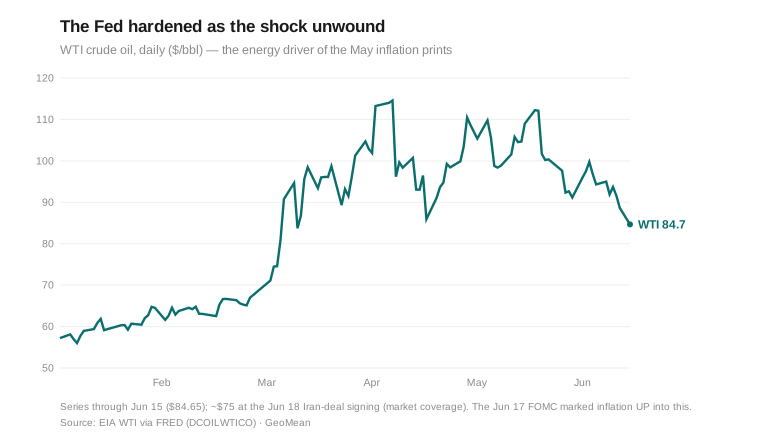
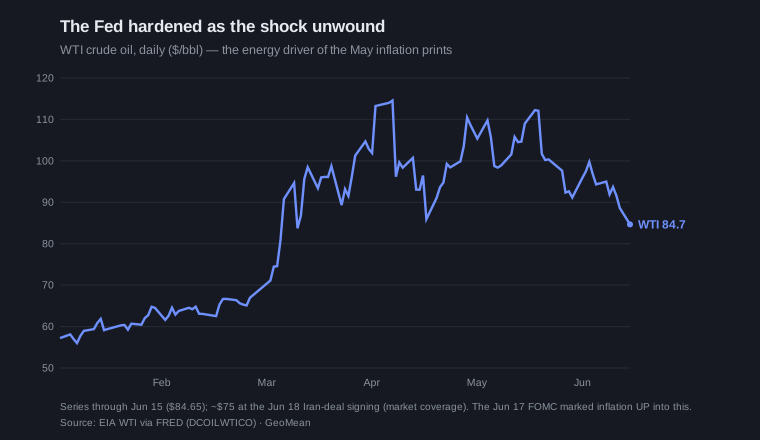
But cheaper oil lowers gas prices; it does nothing about the inflation already working through the supply chain. Producer prices last month rose at their fastest in years, with goods posting their largest monthly jump on record. The only thing keeping that off store shelves is retailers eating the cost in thin, shrinking margins. The question has shifted from whether energy stays expensive — it won’t — to whether those cost increases reach the consumer anyway. Core PCE on June 25 is the next read.
Factory surveys crashed while output rose
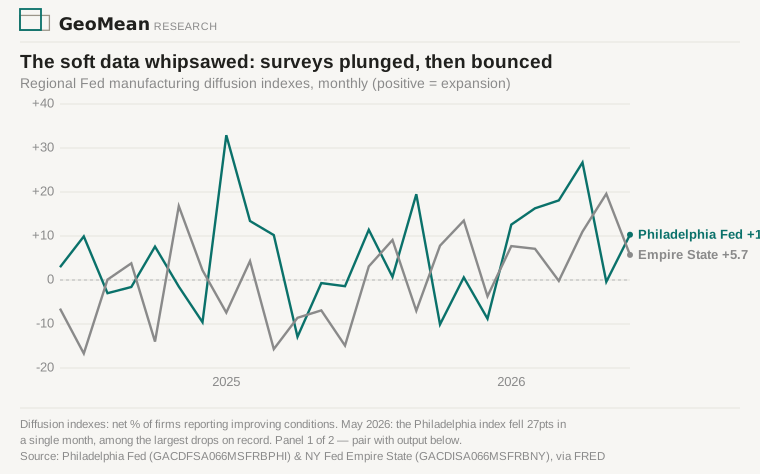
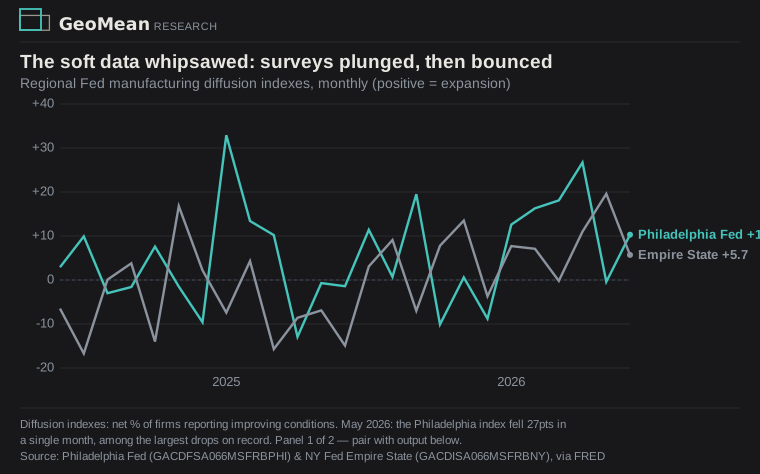
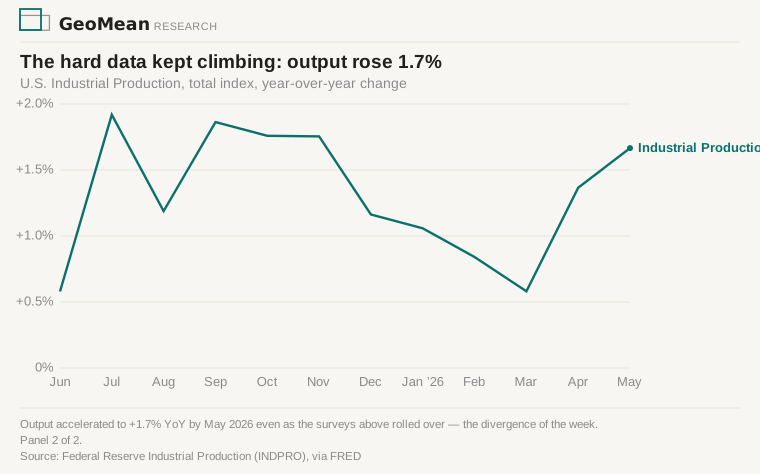
The Fed is forecasting slower growth, and this week the evidence on that split in two. Bob Elliott (Unlimited) pointed to the fourth-largest monthly drop on record in the Philadelphia Fed’s factory survey and the weakest Empire State outlook in twenty years — soft data that often leads a downturn — but noted the hard data hasn’t confirmed it. Chris Semenuk, a portfolio manager covering industrials, read it the other way: the longest US factory recession on record just ended, with the main activity gauge turning positive after three years, output up 1.7%, and order backlogs at records. Falling surveys against rising output is the real disagreement of the week, and it’s why the Fed’s growth call is the shakiest number in its forecast.
Markets traded a rotation, not a crisis
Two weeks ago stocks, crypto, gold, and oil fell together — a straight reaction to higher rates. This week they came apart. Stocks sold off on the higher-rate forecast Wednesday, then rebounded Thursday led by small-caps and cyclical sectors; the dollar hit a multi-month high; gold held near $4,150; the 10-year barely moved; Bitcoin recovered toward $64K. A 25% drop in oil is a tax cut for the economy, and the rebound priced it even as the Fed leaned the other way.
Snapshot
| Level (~Jun 18) | Note | |
|---|---|---|
| Fed funds | 3.50–3.75% (held) | forecast now points to a 2026 hike the market isn’t pricing |
| Fed 2026 inflation forecast | 3.6% / 3.3% core | up ~0.9pp from March; growth cut to 2.2% |
| S&P 500 | ~7,500 | sold off Wed, rebounded Thu |
| Russell 2000 | +2.1% Thu | small-caps led the bounce |
| WTI crude | ~$75 | −25% in two weeks on the Iran/Hormuz deal |
| US 2Y / 10Y / 30Y | 4.19 / 4.46 / 4.90% | long end held through the higher-rate forecast |
| Gold | ~$4,152 | steady |
| Bitcoin | ~$64.3K | recovered from ~$62K two weeks ago |
| Broad dollar index | ~119.5 | multi-month high (trade-weighted, DTWEXBGS) |
Watching
- Core PCE — Thursday, Jun 25 (0.3% expected vs 0.2% prior): the Fed’s preferred inflation gauge, and the test of whether underlying prices firm even as oil falls.
- Q1 GDP, durable goods, income & spending — Jun 25: the growth side of the picture, and a check on whether the factory pickup is real.
- Oil’s floor: holding near $75 means genuine relief; a slide toward the $60s means the inflation scare is fully unwinding.
- Retailer margins: if they stop shrinking, the producer-price increases start reaching the consumer — the single number that will show whether the Fed’s inflation worry was right.
Sources: FOMC statement and projections, Jun 17 (Federal Reserve); WTI daily (EIA); Treasury yields (U.S. Treasury). Post-FOMC remarks from Joseph Wang, Jim Bianco, Bob Elliott, and Chris Semenuk. This read builds on our May jobs, CPI, and PPI deep dives.