Summary of May CPI, June 10, 2026
- Headline CPI accelerated to 4.2 percent — the third straight monthly acceleration and the highest since April 2023, exactly the consensus.
- More than sixty percent of the monthly rise was energy; gasoline alone, a 3.9-percent slice of the index, drove about 58 percent of the print.
- Core came in below forecast at 0.2 percent, leaving annual core at 2.9 percent — the breakout hasn’t happened.
- So far a war-driven oil shock sitting on a core that hasn’t broken; whether it leaks into core is the open question.
The Consumer Price Index rose 0.5 percent in May (seasonally adjusted), and the 12-month rate climbed from 3.8 to 4.2 percent — exactly the consensus, the third consecutive acceleration, and the highest reading in just over three years. Core CPI told a different story: +0.2 percent on the month, below the 0.3 the market expected, leaving the annual core rate at 2.9 percent. The hike case rests on the first number; the no-hike case rests on the second.
Energy drove the reacceleration, almost arithmetically
Energy rose 3.9 percent in May and contributed about 61 percent of the monthly all-items increase — computed directly from the category weights in the release’s Table 1, confirming BLS’s “over sixty percent.” Gasoline alone, a 3.9-percent slice of the index, contributed roughly 58 percent of the print; it rose 7.0 percent on the month and is up 40.5 percent over the year. This is the Iran war working through gasoline prices — a 7-percent-weight category out-contributing the entire 79-percent-weight core by nearly two to one.
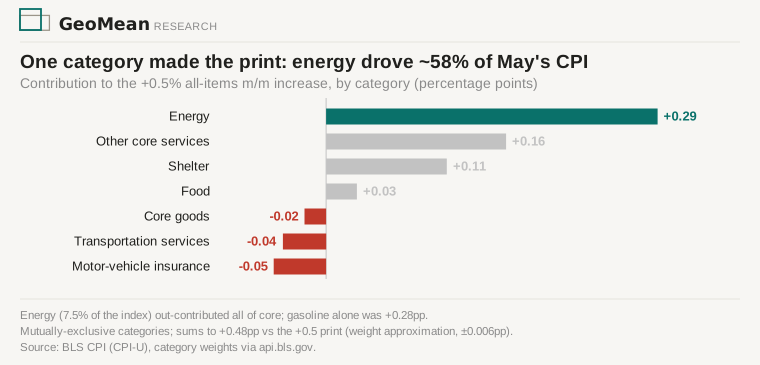
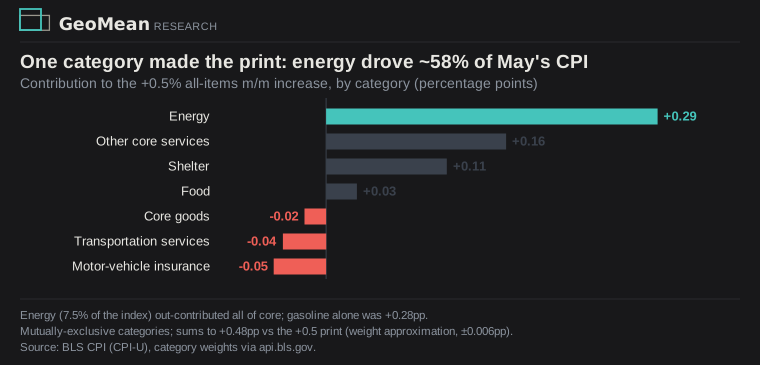
Decomposed into mutually-exclusive categories, energy’s +0.29 percentage points dwarfs every other line and exceeds the sum of all core services and goods; the only negatives are core goods, transportation services, and motor-vehicle insurance — the last the single largest drag on the index.
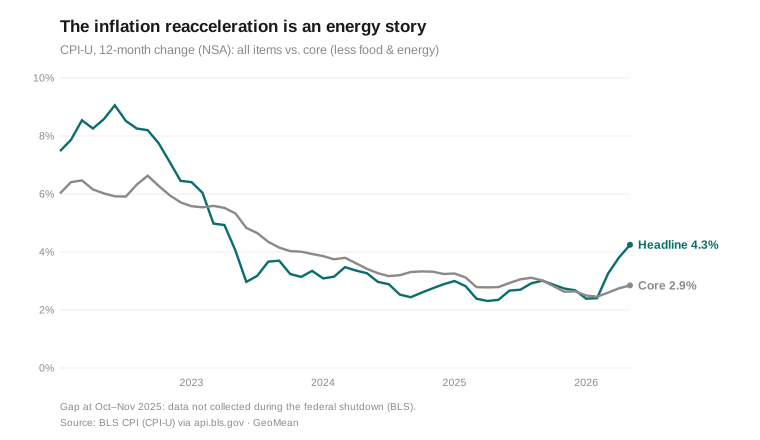
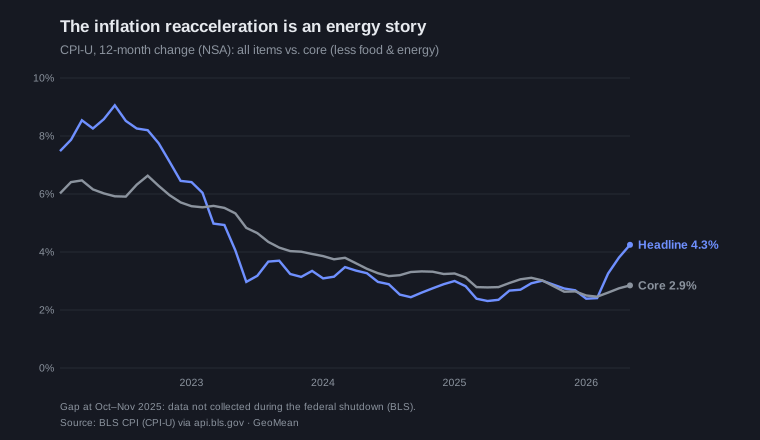
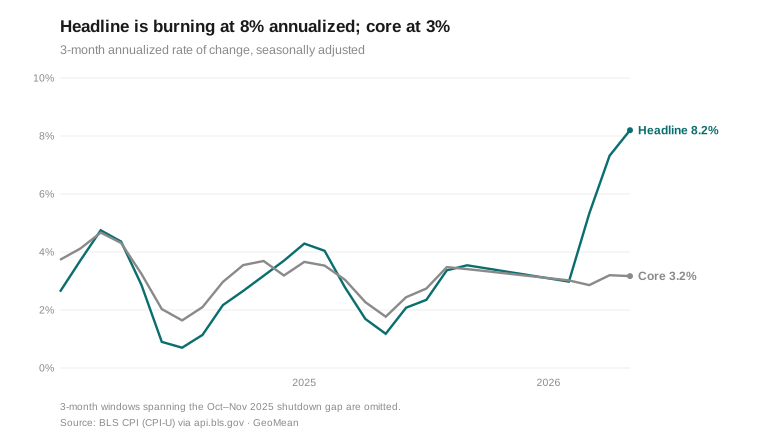
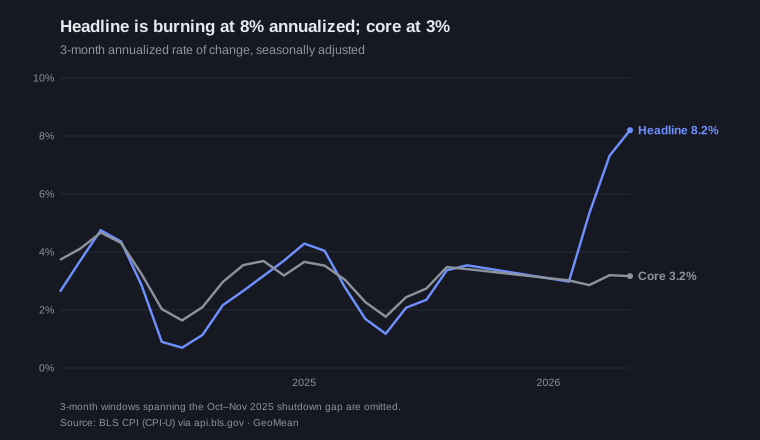
On the same axis, headline is accelerating toward 4.2 while core sits in the high-2s — a gap that opened in March, the month the conflict shock hit, and has widened every month since.
Core is running at 3, not 4
Over the past three months, headline has run at an 8.2 percent annualized pace and core at 3.2. Set the war-driven energy surge aside and inflation looks like it did in February: sticky, above target, but not accelerating.
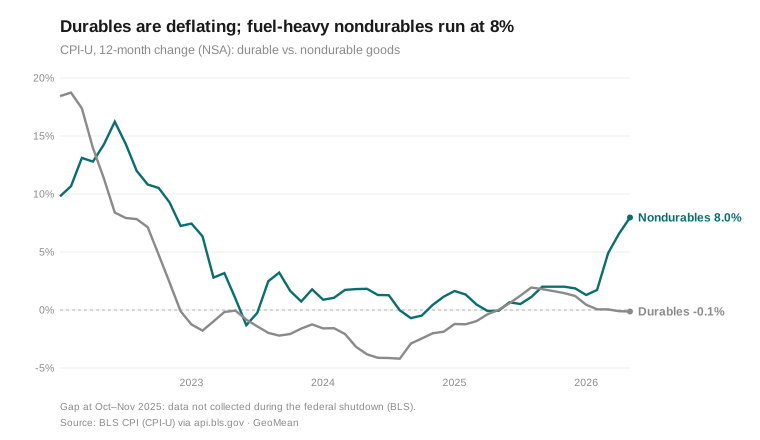
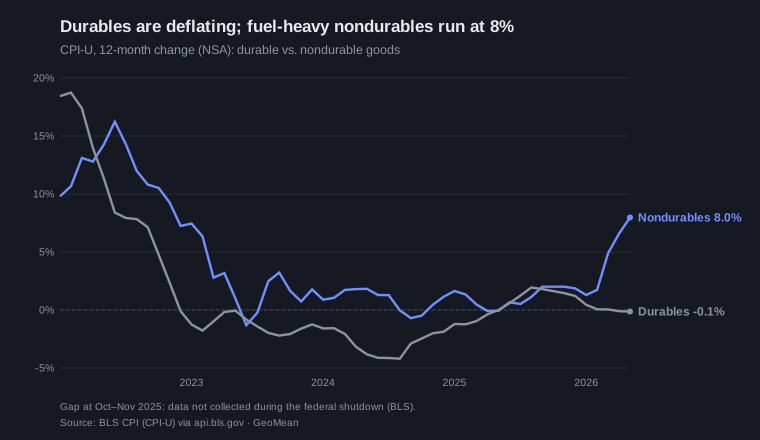
The special aggregates in the release’s Table 3 show it directly: strip food, shelter, and energy, and the remaining 44 percent of the index rose 2.4 percent over the year and 0.1 percent in May. Durables are in outright deflation (−0.1 percent year-over-year) while nondurables — the fuel-adjacent half of the goods basket — run +8.0. Both halves of the goods basket sat near zero for two years; nondurables broke away the month the war began.
And BLS’s own analysis table flags May’s 0.5 headline as the smallest monthly rise since February: even the headline decelerated month-over-month while its 12-month rate accelerated.
Core’s monthly path since December: 0.2, 0.3, 0.2, 0.2, 0.4, 0.2 — April’s 0.4 was the outlier, not May’s 0.2. Under the hood, core goods fell 0.1 percent (new vehicles −0.3), groceries cooled (dairy −0.6, meats −0.2 — the same soft-commodity rollover visible in agricultural futures), and shelter rose a lag-driven 0.3. The release text buried the month’s two biggest detractors: motor-vehicle insurance fell 1.7 percent — the largest single drag on the index — and transportation services fell 0.6. Breadth repeats the pattern from last week’s jobs report: 23 of 33 categories rose, but one carried three-fifths of the print — broad by count, narrow by weight.
Whether oil leaks into core is now the whole question
A supply shock becomes a second inflation wave only if it leaks into everything else. The leak would show first in fuel-heavy services, and one of them already has: airline fares rose 2.7 percent in May — jet fuel passing through. But the broader channels are quiet: transportation services overall fell 0.6 percent, core goods deflated, and food-away-from-home held its trend. One channel leaking is a watch item; three would be a wave. The next two CPI prints — with PPI’s pipeline read tomorrow — settle whether this stays an oil shock or becomes 1973.
May’s print split the rate debate instead of settling it
Both sides of the rate debate were waiting on this print. The hike case — David Cervantes (Pinebrook Capital), “I don’t see how hikes don’t happen” — gets a third straight headline acceleration, a headline above 4 percent, and an 8 percent annualized pace, numbers no Fed can publicly ignore. The no-hike case — Lance Roberts (RIA Advisors), calling for rotation and disinflation resuming late-2026 — gets a core print below forecast, deflating core goods, and cooling food, evidence that underlying inflation never broke out. The print validated both calls and resolved neither. The decision now falls to the Warsh FOMC, June 16–17 — the first meeting of a new chair staring at an energy-driven 4.2 with a 2.9 core.
A 6-percent headline print within a few months would require the current 8.2 percent annualized pace to hold — and whether it holds depends on oil prices, not on anything in the CPI.
Sources: BLS Consumer Price Index — May 2026 (USDL-26-0824) and the underlying CPI-U series via api.bls.gov; consensus via market coverage. Verified figures, flat files (2016–2026), chart source, and the extended analysis are archived in the GeoMean data files. Note: Oct–Nov 2025 CPI was never collected (federal shutdown); computations spanning the gap are omitted, not interpolated.